Do US Citizens Need A Passport To Go To Bimini?
US citizens need a WHTI-compliant document to visit Bimini by ferry. Here is what actually works, what does not, and why a full passport book is the safe choice.
Do US Citizens Need A Passport To Go To Bimini?
US citizens need a valid US passport to enter Bimini, and the US State Department recommends a full passport book for any Bahamas trip rather than relying on a card alone. For sea travel under the Western Hemisphere Travel Initiative, a passport card, Enhanced Driver's License, or approved Trusted Traveler card can also satisfy the document rule on paper, but a passport book is the only document that also covers an emergency flight home.
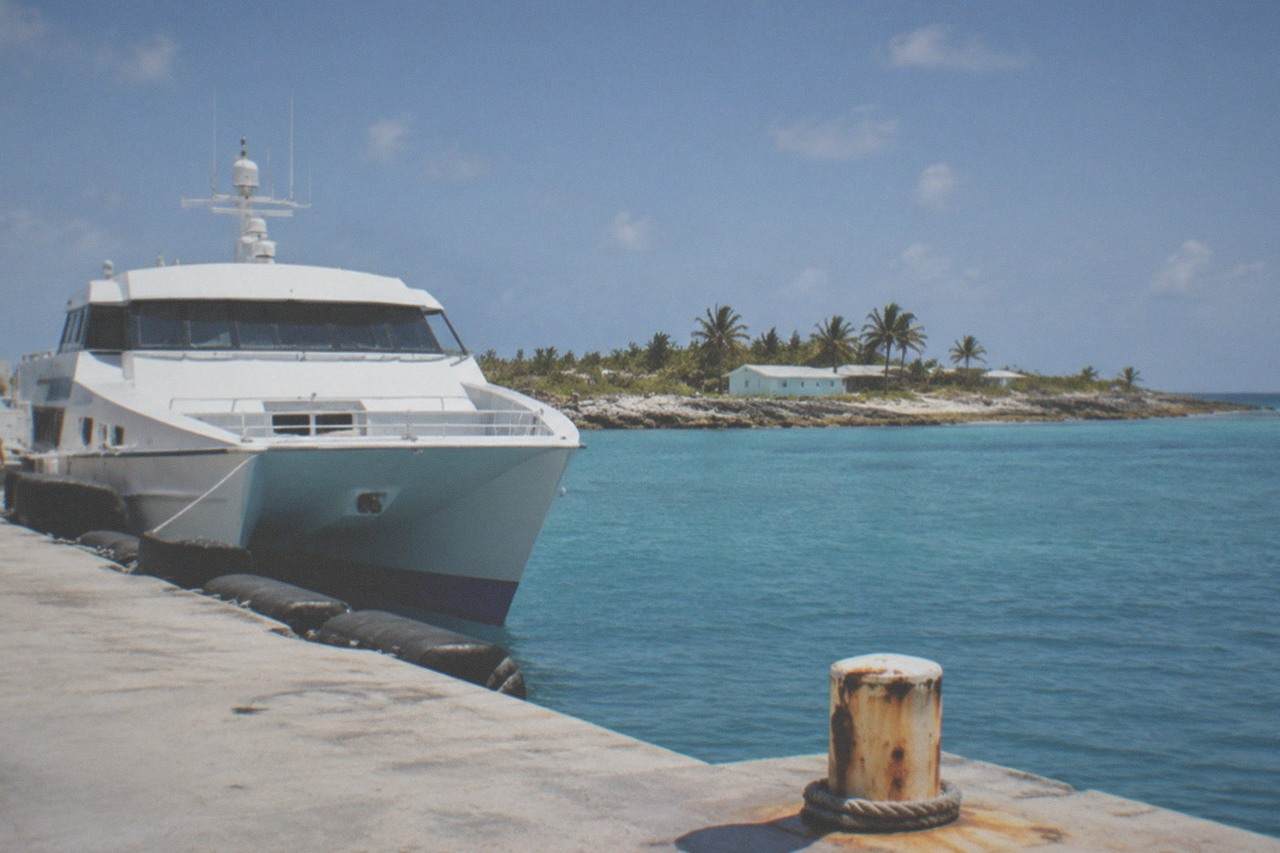
Bimini sits about 50 miles off the Florida coast, but it is a fully international destination, and the border rules are the same ones that govern any trip abroad. Every ferry that runs there, all of them operated by Baleària Caribbean from Port Everglades in Fort Lauderdale, is a scheduled international sea crossing, not a domestic boat ride. That means two border inspections in one day: Bahamas immigration when you step off the ferry, and US Customs and Border Protection when you come back.
The practical confusion comes from cruise-ship rules, which are more lenient for closed-loop sailings. A scheduled ferry to Bimini is not a closed-loop cruise, so the relaxed birth-certificate rules that apply to big-ship passengers do not carry over. If you are weighing the documents question as part of a wider trip plan, the site's full Bahamas Day Tours From Miami coverage walks through the whole day-trip picture, from ferry schedules to what a day on the island actually costs.
The good news is that the paperwork is simple once you know which document to grab. The rest of this article covers what US Customs and Border Protection actually accepts, why the State Department pushes the passport book over the card, what happens at the border on both sides, and how the cruise-rule exception trips people up year after year.
What Documents Does US Customs And Border Protection Accept For Sea Travel?
For sea travel, US Customs and Border Protection accepts a valid US passport book, a US passport card, an Enhanced Driver's License, or an approved Trusted Traveler card as a WHTI-compliant document. For air travel, only a passport book works for US citizens returning from the Bahamas. A Bimini ferry day trip involves no flying, so the sea rules are the ones that matter at the dock.
The Western Hemisphere Travel Initiative, or WHTI, is the law that sets these requirements, and CBP's own guidance spells out the split clearly: passport books for air entry and re-entry, and a wider set of documents for land and sea crossings. A passport card is a wallet-sized credential that works at sea and land ports but cannot be used for international flights. An Enhanced Driver's License, issued by a handful of states, does the same job for sea and land crossings, and a Trusted Traveler card such as NEXUS or SENTRI rounds out the list.
Here is where the honest fine print matters. A passport card is confirmed as sufficient for the US re-entry side of a ferry trip, but whether the card alone satisfies Bahamas-side entry on a scheduled ferry is not independently confirmed the way closed-loop cruise rules are. The State Department's Bahamas country page states that US citizens are generally required to present a valid US passport for entry, and it recommends the book over the card precisely because a card cannot support an unplanned air return. If a medical emergency or a ferry cancellation strands you in Bimini, the only document that gets you onto a flight home is a passport book.
| Document | Works for the Bimini ferry | Works for a flight back to the US | Practical verdict for a day trip |
|---|---|---|---|
| US passport book | Yes | Yes | The safe, recommended choice |
| US passport card | Confirmed for US re-entry; Bahamas-side sufficiency not independently confirmed | No | Risky as your only document |
| Enhanced Driver's License | Yes, under WHTI sea rules | No | Only if your state issues one and you accept the air-return gap |
| Trusted Traveler card (NEXUS, SENTRI, FAST) | Yes, under WHTI sea rules | No | Same gap as the card |
| REAL ID driver's license | No | No for international travel | Proves identity for domestic flights only, never citizenship |
One row in that table surprises people every year. A REAL ID-compliant driver's license, the one you needed for domestic flights, proves nothing at an international border. It does not establish citizenship, and it is not a WHTI document in either direction. If REAL ID is the only government credential in your wallet, you do not have what Bimini requires, no matter how many TSA checkpoints have waved it through.
The full document checklist, including what non-US citizens need and how the rules differ for children, lives in the site's dedicated guide to passports and documents for a Bahamas day trip, which goes deeper than this article on edge cases like minors traveling without both parents.
Why A Passport Book Beats A Passport Card For A Bimini Day Trip
A passport book beats a passport card for a Bimini day trip because it is the only document that covers every way home. The card satisfies the sea crossing under WHTI, but if weather, a mechanical problem, or a medical emergency forces an air return, the card holder is stuck while the book holder flies out on the next Bahamasair or American flight. The State Department makes this exact recommendation on its official Bahamas page.
The scenario is not far-fetched. The Fort Lauderdale to Bimini crossing runs through the Gulf Stream, and while the roughly 2-hour sailing is usually smooth, winter cold fronts between December and April can push strong northerly winds against the north-flowing current, producing short, steep seas that operators take seriously. A cancelled evening return is rare, but it happens, and a day tripper with only a passport card has no fast way off the island. Nassau, by contrast, is not reachable by ferry at all from any South Florida port, so a stranded traveler's realistic exit is the short flight, and flights demand the book.
There is also a processing argument. US passport books are machine-readable and familiar to every officer at both borders, and US Customs and Border Protection even operates preclearance on the return leg from the Bahamas, which speeds up the Fort Lauderdale arrival. Travelers who want to shave more time off re-entry can look at Mobile Passport Control, the free CBP app that lets eligible US citizens submit their declaration on their phone; it supplements the required document rather than replacing it, but it pairs nicely with a book.
The cost gap between the two documents is real but small next to the trip itself. A first adult passport book costs more than a card and takes longer to arrive, so if your Bimini ferry date is close, apply now rather than later, and if the book will not arrive in time, the honest fallback is the card plus an acceptance that an air return is off the table. Most day trippers on the popular ferry packages, like the roundtrip Bimini ferry with Miami Beach hotel transfers, simply carry the book and never think about it again.
What Happens At The Border On A Bimini Ferry Day Trip?
A Bimini ferry day trip puts you through two border checks in one day. On arrival, every non-resident visitor completes a Bahamas Immigration arrival form, keeps a stub, and declares personal items orally to Customs. On departure, travelers aged 6 and over pay a $20 per person Bahamas departure tax, and US Customs and Border Protection preclearance handles the return before the boat docks in Fort Lauderdale.
The Bahamas side is straightforward. The Government of The Bahamas arrivals and departures page sets the process: immigration form on arrival, stub surrendered at departure, oral declaration for personal items, and the departure tax. Whether that $20 tax is bundled into your ferry fare depends on the operator and the specific ticket, so the honest move is to check the operator's live listing for your particular package rather than assume either way.
The US side is where preclearance earns its keep. Because CBP processes returning ferry passengers at the Bimini terminal before departure, you clear the United States while still on Bahamian soil, and the Fort Lauderdale arrival is closer to a domestic one. Have your passport book open to the photo page, keep the immigration stub handy, and answer the standard goods questions plainly. US citizens do not need a visa for tourism stays of up to 90 days, and no Bahamas travel health visa or e-visa is currently required, so the paperwork burden is genuinely just the passport and the forms handed out onboard.
Timing matters more than paperwork on these sailings. Check-in windows are tight, with ticket-only fares on the Gray Line listing requiring check-in as early as 6:15am, and the whole day runs roughly 11 to 15 hours door to door depending on the package. Pack the passport where you can reach it, not buried in a checked bag, because you will show it at check-in, at Bahamas arrival, and at preclearance. The site's guide to Bahamas day trip entry requirements covers the full arrival sequence for travelers who want every step mapped in advance.
Do The Closed-Loop Cruise Rules Apply To The Bimini Ferry?
No, the closed-loop cruise exception does not apply to the Bimini ferry. Closed-loop cruises, sailings that begin and end at the same US port, allow US citizens to re-enter the country with a government photo ID plus proof of citizenship such as a birth certificate, but a scheduled international ferry is a different category of travel. Booking a Bimini ferry ticket does not unlock the birth-certificate shortcut.
This is the single most common documents mistake on the route. Travelers read that cruise passengers can board with a birth certificate and photo ID, book a ferry day trip, and assume the same rule travels with them. It does not. CBP's WHTI guidance frames the birth-certificate option around closed-loop cruise voyages, and even for those, the destination country's own entry rules sit on top: the Bahamas generally asks US citizens for a valid passport regardless. A scheduled passenger ferry to Bimini is international sea travel in the ordinary sense, and the ordinary passport expectation holds.
The distinction matters financially as much as legally. Ferry day-trip packages on this route run from $270 to $299 per person, and a turned-away passenger at the Fort Lauderdale terminal does not get that money back as a matter of course, especially on the ticket-only fares that carry no free cancellation. Compare the terms before you book: the cheapest full-package fare, Gray Line's day trip from Fort Lauderdale at from $270 with hotel pickup and free cancellation, sits only a few dollars under the Admiral Tours Miami's Miami Beach package at from $299, while the bare ferry-ticket fare at from $270 offers no pickup and no free cancellation at all.
| Package | From price | Cancellation | Pickup | Rating and reviews |
|---|---|---|---|---|
| Miami Beach roundtrip Bimini ferry (Admiral Tours Miami) | $299 | Free cancellation | Miami Beach hotels | 4.1 from 681 reviews |
| Day trip to Bimini from Fort Lauderdale (Gray Line) | $270 | Free cancellation | Hotel pickup included | 4.1 from 402 reviews |
| Bimini or Grand Bahama day trip by ferry (US2U) | $284 | Free cancellation | Limited Miami locations | 4.5 from 453 reviews |
| Ferry tickets only (Gray Line) | $270 | No free cancellation | None, terminal check-in | 3.3 from 15 reviews |
Whichever package you choose, the documents answer does not change. Bring the passport book, keep the card as a backup if you have one, and leave the birth certificate at home unless you are sailing on an actual closed-loop cruise. And if the whole question has you second-guessing whether the day trip is worth the paperwork at all, the site's honest breakdown of whether a day trip to Bimini is worth it weighs the cost against the experience.
Common Questions About Passports For Bimini
Do US Citizens Need A Passport To Go To Bimini?
US citizens need a valid US passport for entry to Bimini, and while WHTI sea rules also list the passport card, Enhanced Driver's License, and approved Trusted Traveler cards for sea travel, the State Department recommends the full passport book for any Bahamas trip. The book is the only document that also covers an emergency flight home.
Can I use a passport card instead of a passport book for the Bimini ferry?
A passport card satisfies the US re-entry side of a sea crossing under WHTI, but its sufficiency for Bahamas-side entry on a scheduled ferry is not independently confirmed, and it cannot be used for flights. If there is any chance you would need to fly back, for example after a cancelled sailing or a medical issue, the passport book is the safe choice.
Does my child need a passport for a Bimini day trip?
Children crossing by ferry are subject to the same WHTI document rules as adults, and the Bahamas applies its departure tax to travelers aged 6 and over. Check the State Department's Bahamas page and the operator's listing for the specific document requirements that apply to minors on your sailing date before you book.
Is a REAL ID enough to get to Bimini?
No. A REAL ID-compliant driver's license proves identity for domestic US air travel but does not prove citizenship and is not accepted as a standalone document at an international border, by air or by sea. You still need a passport or another WHTI-compliant citizenship document for Bimini.
Do I need a Bahamas visa or health visa for a day trip?
No. US citizens do not need a visa for tourism stays of up to 90 days, and the COVID-era Bahamas Travel Health Visa program is not referenced as active on the current official arrivals page. You will complete a Bahamas Immigration arrival form and surrender the stub at departure, and pay the $20 departure tax if you are 6 or older.
Where does the ferry to Bimini actually leave from?
Every scheduled ferry to Bimini departs from Port Everglades, Terminal 21, in Fort Lauderdale, roughly 30 to 45 minutes north of Miami. Many day-trip packages include hotel pickup from Miami or Miami Beach, but the vessel itself never leaves from a Miami dock, so plan the transfer time into your day.