What To Bring On A Bimini And Grand Bahama Ferry Day Trip
A day trip to the Bahamas by ferry is a long day with a short island window, and what you carry decides how that window goes. Here is the packing list that matters: a valid passport, seasickness prep for a two to three hour crossing, serious sun protection, and no currency exchange at all.
Short answer
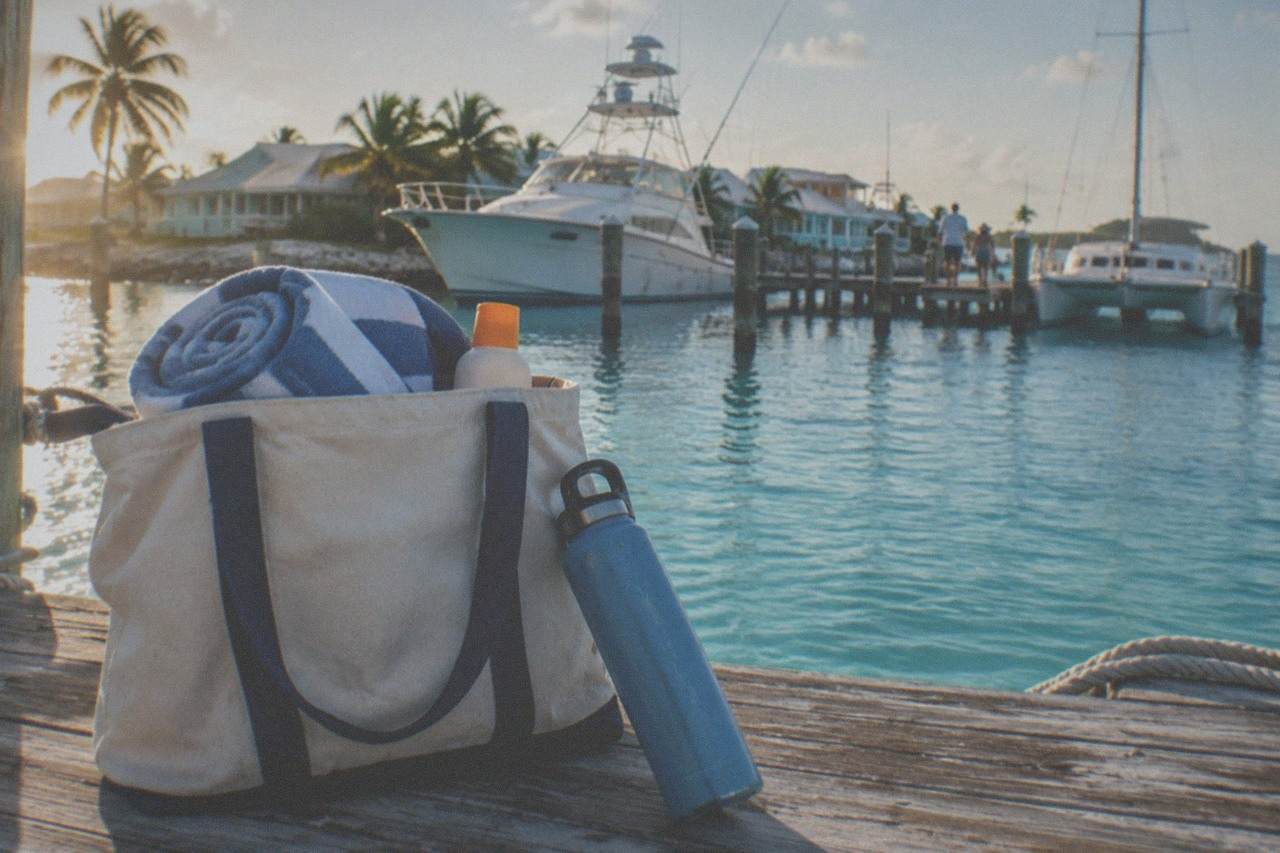
Bring a valid passport, motion-sickness remedy, high-SPF sunscreen, a hat, sunglasses, swimwear, a towel, a dry bag for electronics, and a light layer for the ferry's air conditioning. You do not need Bahamian currency, since the Bahamian dollar is pegged 1:1 to the US dollar and US cash is accepted everywhere. Pack light, since the day runs roughly 11 to 15 hours door to door.
A Bahamas day trip from Miami is a compressed trip. The ferry crossing alone takes about two hours each way to Bimini, or about three hours each way to Grand Bahama, and the full door-to-door day runs roughly 11 to 15 hours depending on the package you book. That leaves about four to six hours of actual island time. What you carry onto the boat is what you have for those hours, because there is no hotel room, no car, and no second suitcase waiting on the other side.
This guide is the positive packing list: the things to bring. It is deliberately distinct from the question of what you cannot bring, which is a customs and prohibited-items matter covered in what you cannot bring into the Bahamas. Here the focus is documents, the crossing, the beach, and the small items that make a long day comfortable.
What Documents Do You Need For A Bahamas Day Trip?
The one document that decides your whole day is a valid passport. Bring the passport book, not just a card. Technically, a US passport card, Enhanced Driver's License, or approved Trusted Traveler card satisfies the Western Hemisphere Travel Initiative for sea travel, but the State Department recommends a full passport book for Bahamas trips in case an emergency forces a return by air.
The reasoning is straightforward. A passport card works for sea re-entry into the United States, but a card cannot get you onto a flight. If a ferry is cancelled, if you have a medical emergency, or if anything else strands you in the Bahamas overnight, the only fast way home is a roughly one-hour flight, and that requires the book. The card's entry-side sufficiency on a scheduled ferry is also not independently confirmed as guaranteed, so the safe instruction is simple: bring a valid passport.
On arrival, every non-resident visitor completes a Bahamas Immigration arrival form and keeps a stub to surrender at departure. Personal items are declared orally to customs. A $20 per person departure tax applies to travelers aged 6 and up leaving the Bahamas; some ferry fares bundle it and some do not, so check your specific fare on the operator's live listing. On the return leg, US Customs and Border Protection preclearance operates before you board, which is why the departure process feels longer than the arrival.
| Document or form | Bring it? | Why |
|---|---|---|
| Valid US passport book | Yes, strongly recommended | Covers sea entry, air emergencies, and preclearance without question |
| Passport card only | Not recommended alone | Works for sea re-entry but cannot support an emergency air return |
| Bahamas Immigration arrival form | Issued on arrival | Complete on the boat or at the terminal; keep the stub for departure |
| Departure tax, $20, age 6+ | Sometimes bundled | Check whether your fare includes it on the operator's listing |
| Mobile Passport Control app | Optional | Speeds CBP processing on return; supplements, never replaces, the passport |
For the full entry rules, including the WHTI document list straight from the source, see CBP's Western Hemisphere Travel Initiative page, and for country-level guidance, the State Department's Bahamas country page. Our longer passport and documents guide walks through every edge case, including kids and closed-loop cruise rules.
What Should You Pack For The Ferry Crossing?
Pack for the crossing like it is a short flight: motion-sickness remedy taken before boarding, a light layer for air conditioning, water, and something to pass the two to three hours. The Bimini ferry takes about two hours each way and the Grand Bahama crossing about three, and the Gulf Stream can be choppy even on a pleasant island day.
The single most useful item is a seasickness remedy taken before departure, not after symptoms start. The crossing runs across the Florida Straits and the Gulf Stream, where wind against the north-flowing current can build short, steep waves. Winter cold fronts from December through April are the classic rough-weather driver, and tropical systems can disrupt the peak of hurricane season from August through October. A tablet taken at the terminal works; a tablet taken mid-crossing after you already feel unwell does far less. Ginger chews and acupressure wristbands are the non-drowsy alternatives many day-trippers prefer.
The ferry itself is a high-speed catamaran, not a small boat, so most crossings are comfortable. But the day is long: the round-trip Bimini package from Miami Beach runs about 15 hours door to door, with hotel pickup in the early morning and a return to port in the evening. Pack a small day bag you can keep at your seat, with a light jacket or long-sleeve shirt, since the cabin air conditioning plus sea breeze can feel cold after a sun-soaked afternoon on the island.
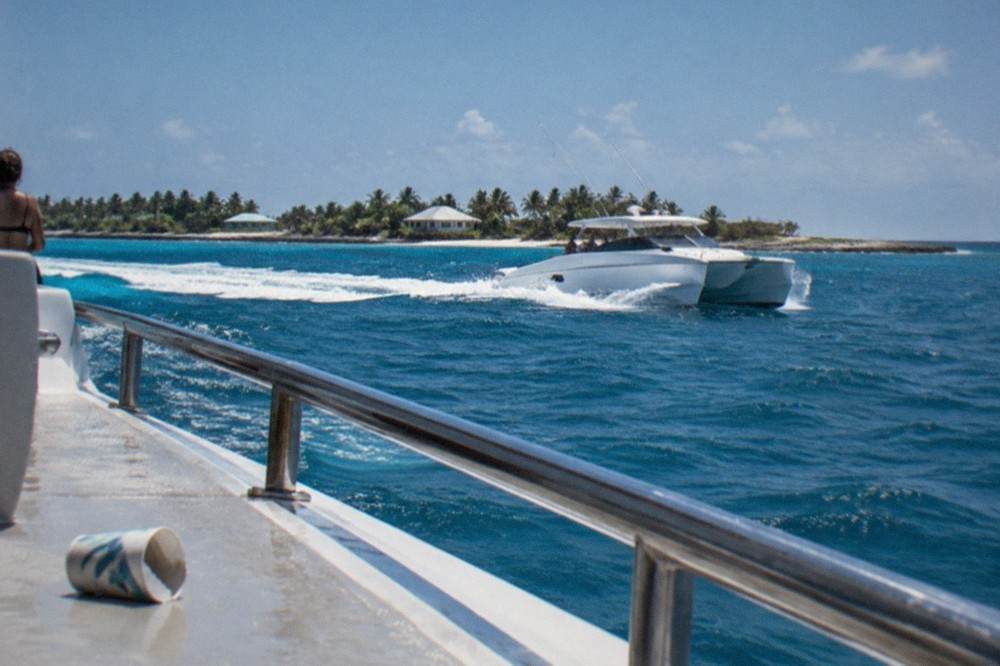
If you are still choosing which package to book, these three cover the common cases: a full-service round trip with Miami Beach hotel pickup, the cheapest full-package fare on the roster, and the two-island option.
The round-trip Bimini ferry day trip from Miami Beach includes hotel pickup and transfers, so the only thing you need to manage is the day bag itself. With 4.1 from 681 reviews, the deepest review pool on the roster, it is the package most day-trippers compare everything else against. Free cancellation is included, and Check availability on the live listing shows current dates.
What Should You Wear And Bring For The Beach?
Wear your swimwear under your clothes and bring a towel, a dry bag, and reef-safe sunscreen in your carry-on. Island time is roughly five to six hours on Bimini, and there is no place to change except the beach facilities, so arriving dressed for the water saves a chunk of your day.
Beachwear is the easy part, but the timing is what trips people up. Check-in at Port Everglades opens in the early morning, the ferry departs mid-morning, and you step off in Bimini around midday with the return sailing in the early evening. Every minute spent finding a changing room is island time spent indoors. A swimsuit under a cover-up or a t-shirt and shorts is the standard move.
A dry bag matters more than most packing lists admit. You will be on a boat, then a beach, then a boat again, and phones, wallets, and passports spend the whole day one wave away from salt water. A cheap roll-top dry bag, or at minimum a zip-seal bag inside your day pack, protects the one document you cannot replace mid-trip. A quick-dry towel beats a cotton one, because a soggy towel in a sealed bag is its own small misery for the ride home.
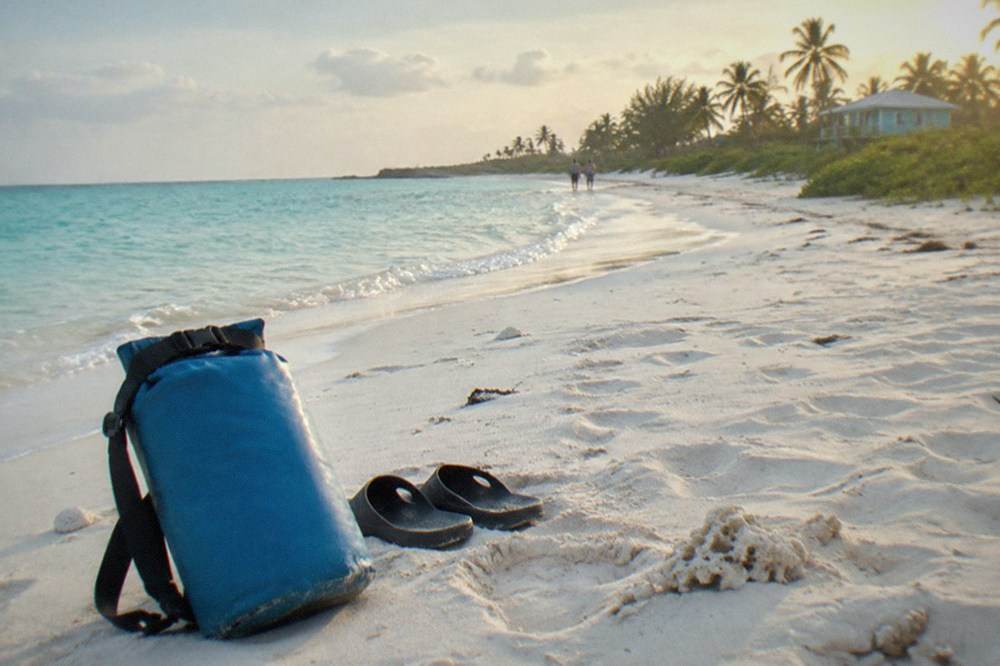
Footwear is a two-shoe question. Flip-flops or slides for the beach and the boat, plus something with a strap if you plan to walk Alice Town, rent a bike, or wade over patchy bottom. One pair of each is enough. Leave the hiking boots at home.
Between the two, the beach kit is small: swimsuit, cover-up, towel, dry bag, sandals, and a bag that closes. The full what to expect on a Miami to Bimini day trip guide covers the island side of the day in detail.
Do You Need Cash Or Currency Exchange In The Bahamas?
No exchange is needed. The Bahamian dollar is pegged 1:1 to the US dollar and US dollars are accepted everywhere in the Bahamas, including Bimini, so a US-based day-tripper can spend the entire day without touching a currency counter. Bring a modest amount of US cash for small beach vendors and tips, plus a card as backup.
The peg is official and long-standing, not a courtesy: prices quoted in Bahamian dollars cost the same number in US dollars. That removes an entire category of travel errand from your packing list. There is no reason to withdraw foreign currency, no reason to buy a currency card, and no reason to calculate anything at a lunch counter.
What still matters is the form your money takes. A beach vendor selling conch salad, a tip for a shuttle driver, and a small souvenir stall may all be cash-only. Cards work at restaurants and shops in Alice Town, but a day-tripper's spending is mostly small and casual. A modest amount of US cash in small bills, kept in the dry bag, covers the realistic day.
| Money item | Bring it? | Notes |
|---|---|---|
| US cash, small bills | Yes, a modest amount | Beach vendors, tips, and small stalls may be cash-only |
| Credit or debit card | Yes | Works at restaurants and shops; backup for the day |
| Bahamian dollars | No | 1:1 peg with USD means exchange is pointless for a day trip |
| Currency exchange at port | No | Not needed; USD accepted everywhere |
| Departure tax cash | Check your fare | $20 per person age 6+; sometimes bundled, sometimes not |
The one money question to settle before you sail is the departure tax, covered in the documents section above. The Government of The Bahamas arrivals and departures page states the general rules; whether your specific ferry fare bundles the tax is answered on the operator's own listing.
What Sun Protection Should You Bring?
Bring high-SPF sunscreen, a brimmed hat, polarized sunglasses, and a rash guard or swim shirt, and reapply after swimming. The Bahamas sits at roughly 25 degrees north latitude with strong midday sun, and a day-tripper's beach hours land almost exactly in the peak-burn window of 10am to 4pm.
The timing is the trap. You arrive on island around midday after a morning indoors on the ferry, pale and rested, and step straight into tropical midday sun for the entire afternoon. A single morning application of sunscreen will not survive swimming and sweat. Reef-safe sunscreen is the right choice both for your skin and for the water you are swimming in, and a physical block containing zinc oxide holds up better through salt water than a thin chemical spray. The full index of guides sits on Bahamas Day Tours From Miami.
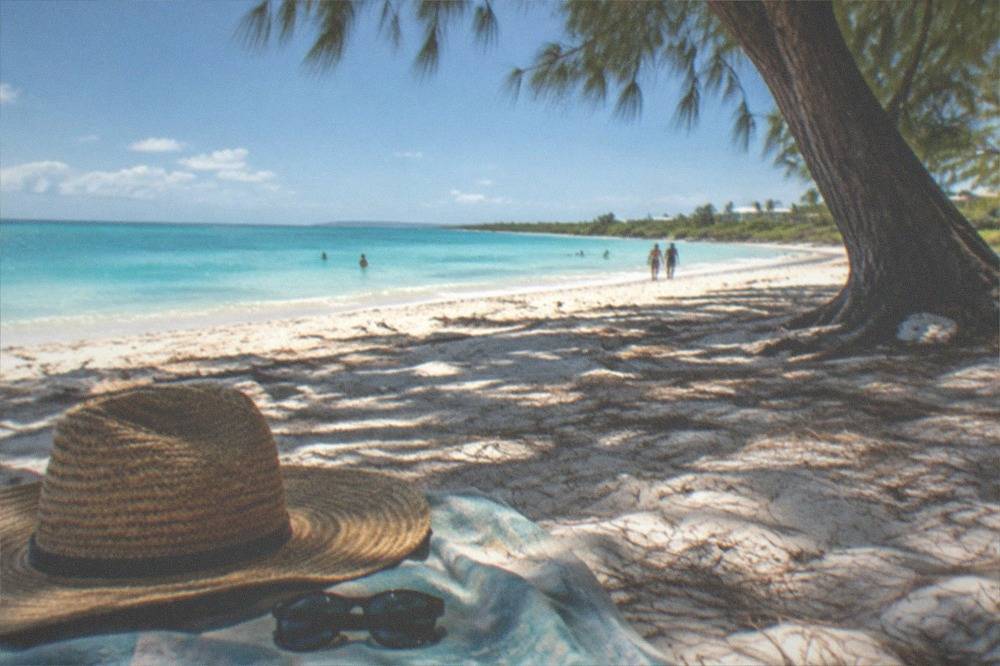
A hat with an actual brim beats a baseball cap, because it shades ears and neck, which are the two spots that burn first on the water. Polarized sunglasses cut the glare off the sea dramatically on the ferry deck and make the crossing itself more pleasant. A swim shirt or rash guard is the underrated item: it is an hour of shade you wear, and it removes the constant reapplication problem for your shoulders and back.
| Sun item | Why it earns bag space | Priority |
|---|---|---|
| SPF 50 reef-safe sunscreen | Midday island hours land in peak-burn window; reapply after swims | Essential |
| Brimmed hat | Shades ears and neck, the first burn spots on the water | Essential |
| Polarized sunglasses | Cuts sea glare on deck and beach | High |
| Rash guard or swim shirt | Worn shade; no reapplication needed for torso | High |
| SPF lip balm | Lips burn and chap in salt air | Nice to have |
If you are prone to burning, plan around the calendar as well as the bag. Our best time for a Bahamas day trip guide covers the seasonal trade-offs, including the shoulder months that balance weather risk against crowd levels.
What Should You Leave Behind On A Bahamas Day Trip?
Leave behind anything you would grieve losing to water, anything prohibited by customs, and anything heavier than a day bag. That means laptops, jewelry, drones without checking rules, large cameras, hard liquor beyond the duty-free allowance, and any fruit, meat, or produce you were carrying as a snack.
The water logic is simple. Everything you bring rides on two ferry crossings and several hours of beach, and bags get set down on wet surfaces. A laptop has no job on a day trip, and a passport is the only irreplaceable item that must make the trip, so it deserves the dry bag and everything else can stay home.
The customs logic is a separate question with its own details. Fresh produce, meat products, and certain other food items are restricted entering the Bahamas, and returning to the US has its own agricultural rules. The full prohibited and restricted list, including the alcohol and tobacco allowances and the items that surprise people, lives in our customs and prohibited items blog post. Pack snacks from a sealed-package aisle, not the fruit bowl.
One booking-related note belongs here rather than anywhere else: the ferry-tickets-only package is the one roster fare with no hotel pickup and no free cancellation, an Economy class ticket alone. It is the cheapest way across at from $270, but it is a different product from the full-service day trips, so read the listing terms before choosing it. The Gray Line full-package day trip, from $270 with hotel pickup and about six hours of free island time, is the fairer comparison for most travelers.
How Should You Pack For A 15-Hour Day?
Pack as one small day bag per person, worn as a backpack or crossbody, with the passport in a dry inner pocket, swimwear worn rather than carried, and nothing that needs both hands. The day runs roughly 11 to 15 hours door to door, through a terminal, a ferry, a beach town, and a customs line, and every item should survive being carried the entire time.
The long day is the real packing constraint. The earliest packages pick up from Miami Beach hotels in the morning and return after the evening sailing docks, so you are on your feet, in queues, or on deck for most of it. A single soft day bag per person, light enough to carry up a gangway stairs, is the practical ceiling. Wheeled luggage is wrong for a beach day and awkward on a ferry.
Organize by phase rather than by item. Documents and phone in one secure pocket you never open on the beach. Sunscreen, hat, and sunglasses in the top of the bag for the island. The light layer stays accessible for the return crossing, when the air conditioning and fatigue arrive together. Snacks and an empty water bottle to fill after security round out the bag, since the island hours are long and lunch is on you.
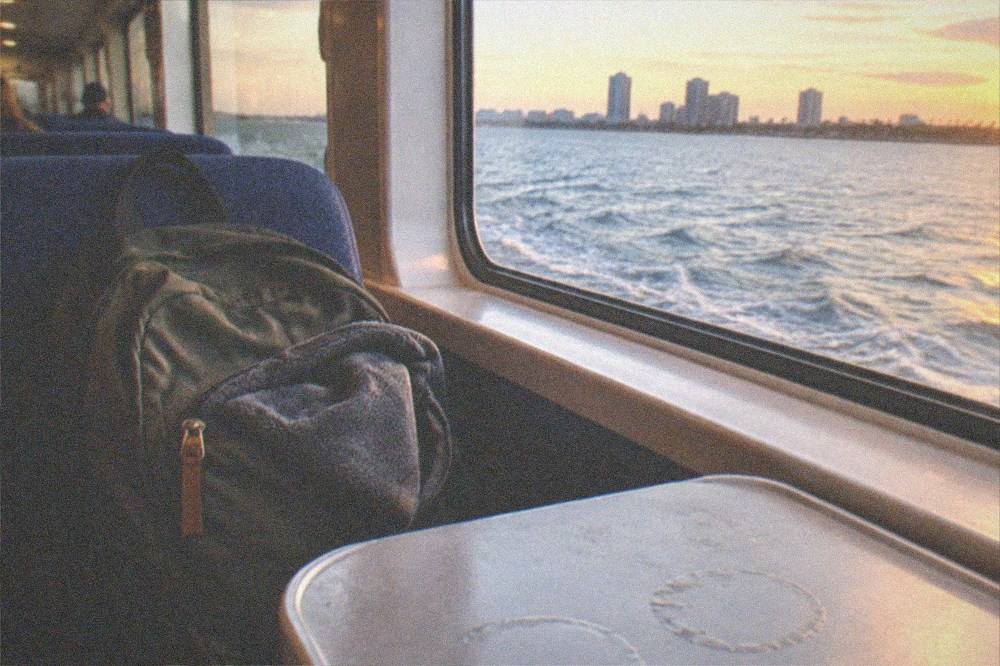
Kids change the arithmetic but not the principle. The family packing angles, including stroller realities on a ferry and what children need for the crossing, are covered in our Bahamas day trip with family and kids guide. The same one-bag-per-person rule holds; the bags just carry more snacks.
What Does A Complete Bahamas Day-Trip Packing List Look Like?
A complete list is short: passport, seasickness remedy, light layer, sunscreen, hat, sunglasses, swimwear worn under clothes, towel, dry bag, sandals, modest US cash, a card, sealed snacks, and an empty water bottle. Everything else is either available on island or better left at home, and the whole kit should fit in one day bag you can carry up a gangway.
That is genuinely the whole list. The items below are the tested version, sorted by the phase of the day each one serves, so you can check the bag against the timeline rather than against a random pile of suggestions.
| Phase of the day | Items | Notes |
|---|---|---|
| Check-in and outbound crossing | Passport, seasickness remedy taken at the terminal, light layer, phone and charger | Check-in opens early; the crossing is about 2 hours to Bimini, about 3 to Grand Bahama |
| On island, midday to early evening | Sunscreen, hat, sunglasses, swimwear worn under clothes, towel, sandals, dry bag with cash and card | Roughly 4 to 6 hours of island time depending on the package |
| Beach and water | Reef-safe sunscreen for reapplication, rash guard, zip-seal bag for phone | Vendors may be cash-only; USD spends 1:1 |
| Return crossing and preclearance | Passport stub from arrival form, light layer, snacks | US preclearance happens before boarding; keep documents reachable |
| Leave at home | Laptop, jewelry, fruit and produce, wheeled luggage, cotton towel | Full restricted list is a customs question, covered separately |
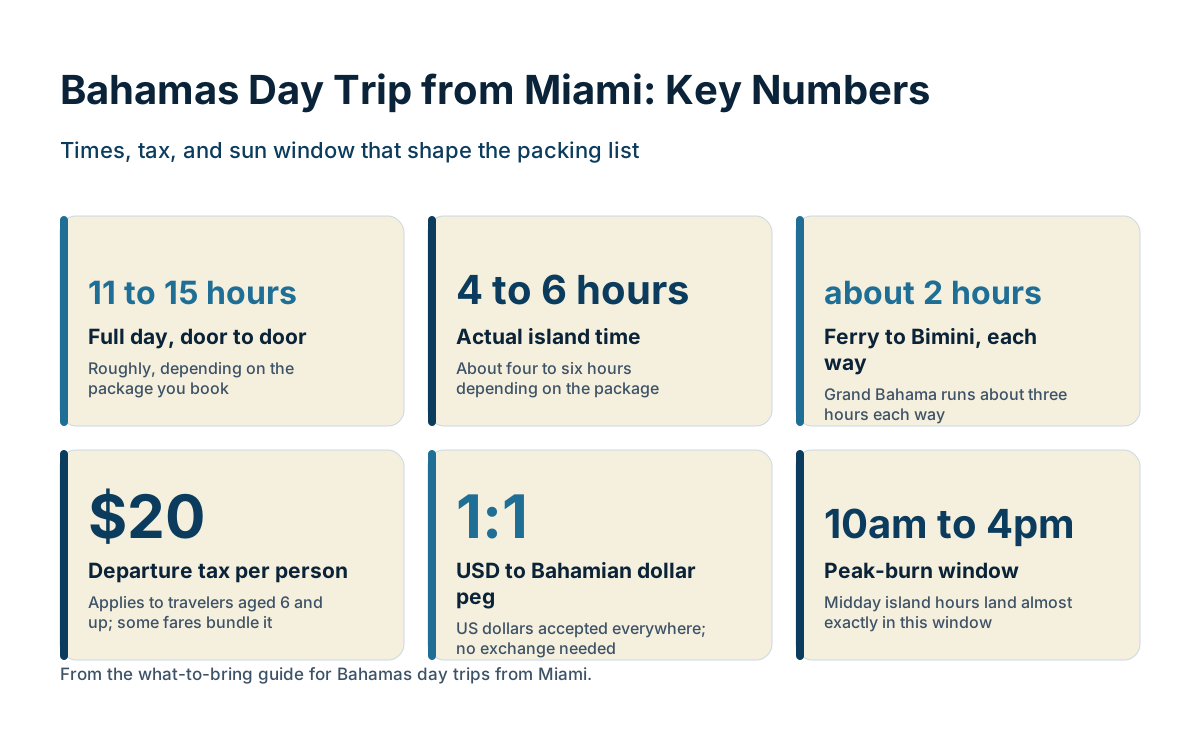
The chart above reads the day left to right: what the bag needs at check-in, what it needs on the beach, and what it needs for the ride home. If an item does not serve one of those phases, it does not make the trip.
For the cost side of the day, including what the fares run across the roster's packages and where the extras add up, see our Bahamas day trip cost breakdown. If you are weighing whether the whole enterprise is worth a 15-hour day, the honest answer, with the numbers, is in is a Bahamas day trip from Miami worth it.
Whichever package you choose, the packing list does not change. The Gray Line day trip from Fort Lauderdale is the cheapest full-package fare on the roster at from $270, with hotel pickup and drop-off included and 4.1 from 402 reviews behind it, and it rewards a light bag exactly the same way the pricier options do. Free cancellation applies, and the live listing carries the current sailing dates.
Common Questions About What To Bring On A Bahamas Day Trip
Do you need a passport for a Bahamas day trip from Miami?
Yes, bring a valid passport book. A passport card technically satisfies the Western Hemisphere Travel Initiative for sea travel, but the State Department recommends the full book because a card cannot support an emergency air return if the ferry is cancelled or you are stranded overnight.
Do you need to exchange money for the Bahamas?
No. The Bahamian dollar is pegged 1:1 to the US dollar and US dollars are accepted everywhere in the Bahamas, including Bimini. Bring a modest amount of US cash in small bills for vendors and tips, plus a card as backup.
What should you bring for seasickness on the ferry?
Take a motion-sickness remedy before boarding rather than after symptoms start, since the crossing is about two hours to Bimini and about three to Grand Bahama. Ginger chews and acupressure wristbands are non-drowsy alternatives that many day-trippers prefer.
Can you bring food and snacks to the Bahamas?
Sealed packaged snacks are generally fine, but fresh fruit, produce, and meat products are restricted by customs. Check the prohibited items rules before packing food, and declare anything required on your arrival form.
How big should your bag be for a day trip?
One small day bag per person, carried as a backpack or crossbody. The day runs roughly 11 to 15 hours door to door through a terminal, ferry, beach town, and customs line, and everything you bring must survive being carried the whole time.
Do you need a towel and dry bag?
Yes to both. A quick-dry towel beats cotton for the return crossing, and a dry bag or zip-seal bag protects your passport, phone, and cash through two ferry crossings and several hours of beach.